Written by Ed Filowat, creator of Backpack Studio · Updated September 13, 2026
Backpack Studio makes the iPhone’s built-in mic sound great. You don’t need to buy a microphone to start recording.
But if you want a different vocal sound, a dedicated desk setup, or separate microphones for each person, an external mic can be worth adding. Here are the options, what they cost, and what you need to connect them.
US prices checked September 10, 2026 · No affiliate links
$190 on the checked sale, plus a stand. Our step-up choice for a mixed mobile and XLR future. Sweetwater
For a computer-only experiment at the lowest possible cost, move the FIFINE AM8 higher on your personal list. If you already own an interface, the original PodMic becomes a much stronger bargain. A ranking is only useful when its assumptions match your setup.
The ten, ranked by practical value.
This order favors solo spoken-word recording, manageable setup costs and usable monitoring, with extra weight for mobile practicality. It does not imply that number one sounds better on every voice. Prices exclude tax and shipping, and sales can end.
*Budgeting illustration, not a retailer quote or a tested compatible bundle: add a $40 stand allowance when needed, $20 for an XLR cable, and $150 for an interface when starting from zero. These round allowances are arithmetic assumptions; choose an adequately rated stand and a suitable interface before buying. Totals assume a compatible computer and existing wired headphones. Phone adapters, extra power, upgraded arms and headphones are not included. Included desk stands may not put a mic at mouth height in every workspace.
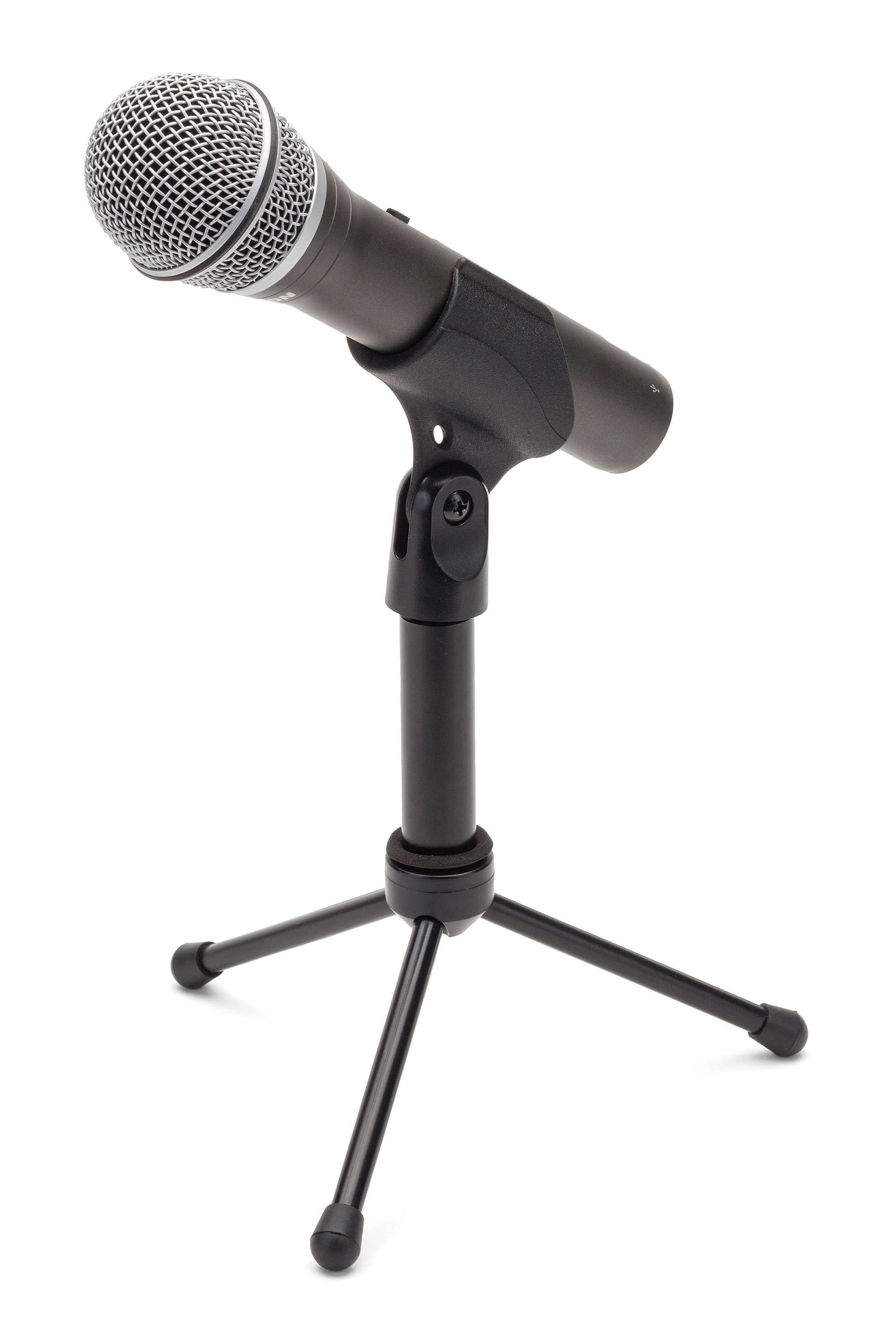
The Q2U earns first place because it covers the essentials without making a beginner assemble a shopping cart of accessories. The current pack includes a tabletop tripod, mic clip, foam windscreen, and USB and XLR cables. Its headphone output lets you hear yourself directly, and XLR gives you a route into an interface later. Samson
There is an important 2026 buying trap: Samson now specifies USB-C, but older stock still exists. The $79.99 B&H listing explicitly specifies Mini-USB; the current Sweetwater pack is $99.99. Confirm the connector and supplied cable before ordering. This is a practical starter recommendation, not a claim that the refreshed version has been independently tested against every rival. B&H · Sweetwater
Phone / tablet: Samson describes mobile-device use, but the phone cable, available power and recording app still need checking. Do not assume the included computer cable fits your iPhone. Samson
Buying verdict: Buy it for economical, close-miked speech and flexibility. Choose the MV6 instead if automatic level management matters more than XLR.
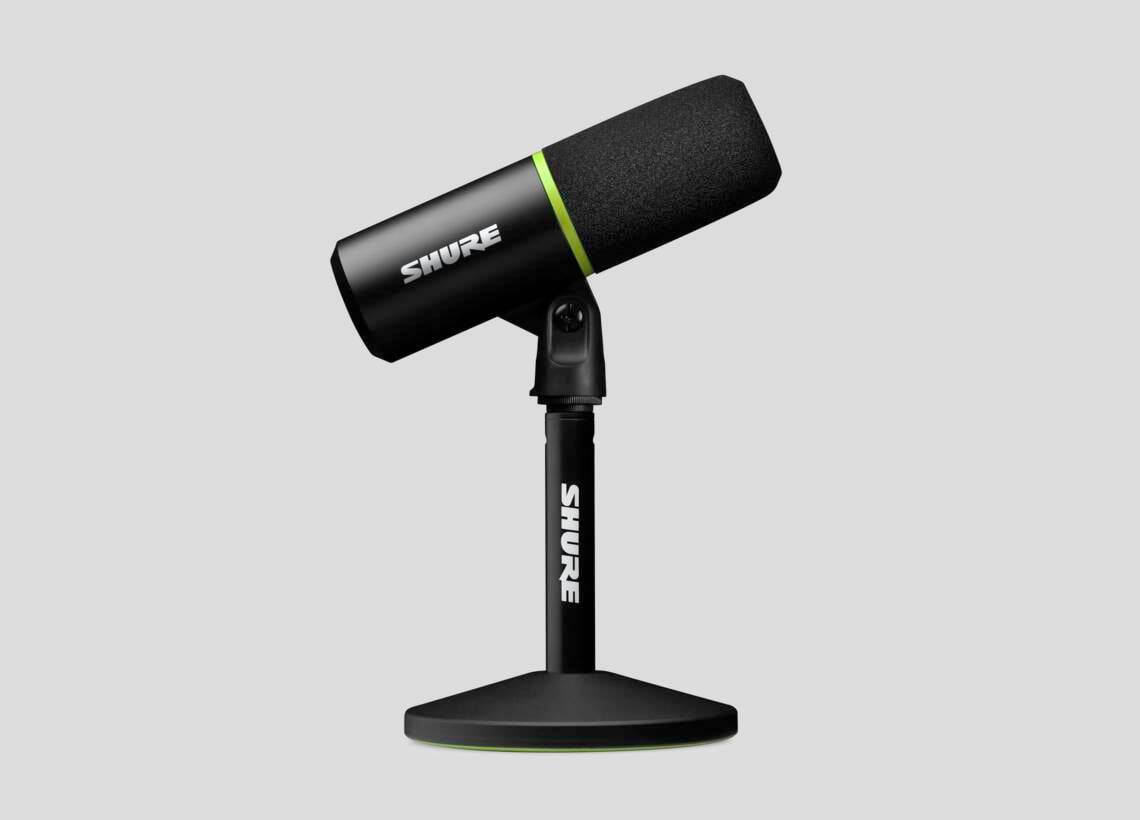
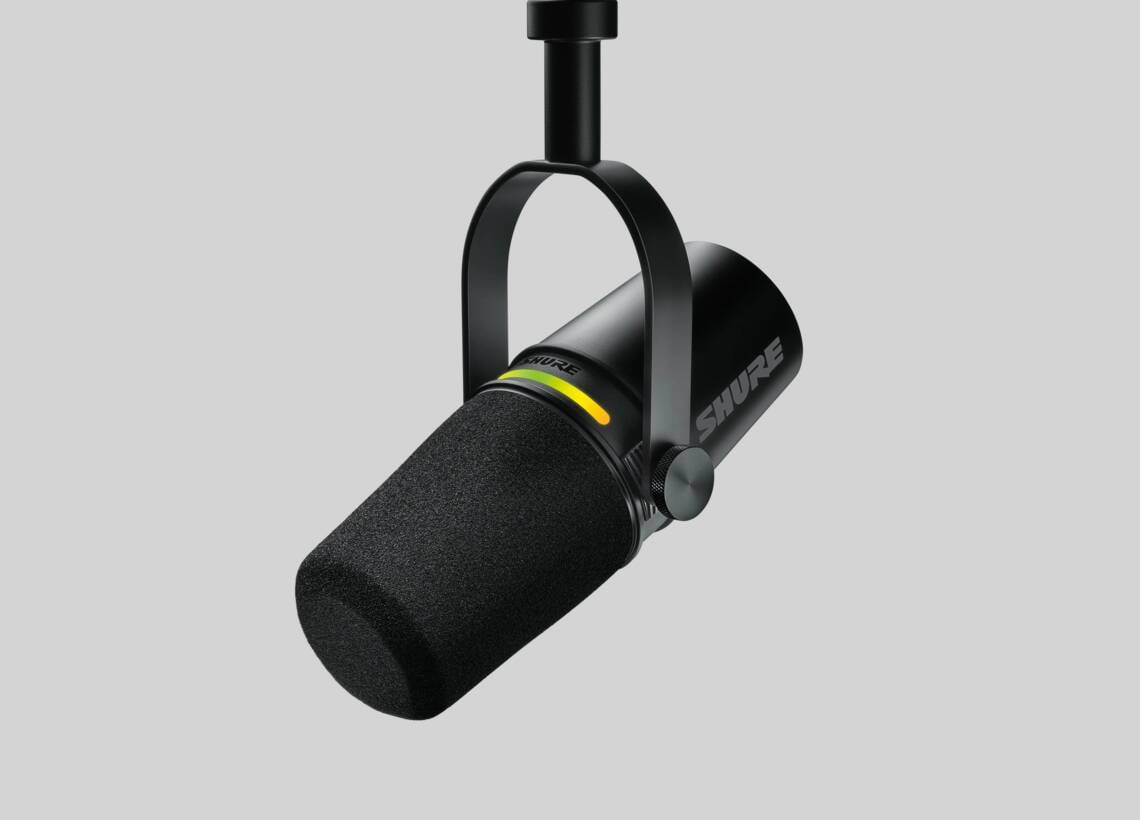
Ignore the gaming label: the MV6 is an attractive podcast starter because the stand, headphone monitoring and useful voice processing come together. Auto Level adjusts gain, while Shure provides a denoiser and pop-reduction processing. That is a sensible trade for someone who wants to concentrate on speaking rather than maintaining an audio chain. Shure
The current price checked here is $169, not the $149 figure in older launch coverage. Its limitation is USB-only connectivity: an eventual XLR mixer cannot use it as an ordinary analog microphone. Podcastage provides original distance, room-noise and processing comparisons worth listening to before choosing a sound; this guide does not substitute a personal listening test. B&H · Podcastage / Bandrew Scott
Phone / tablet: Shure explicitly lists Android/iOS support and MOTIV mobile apps. A Lightning iPhone needs the additional cable Shure specifies; MOTIV Mix itself is the desktop app. Shure
Buying verdict: My straightforward starting recommendation for a solo Backpack Studio user who does not need XLR. Verify the exact phone/app combination before a paid recording.
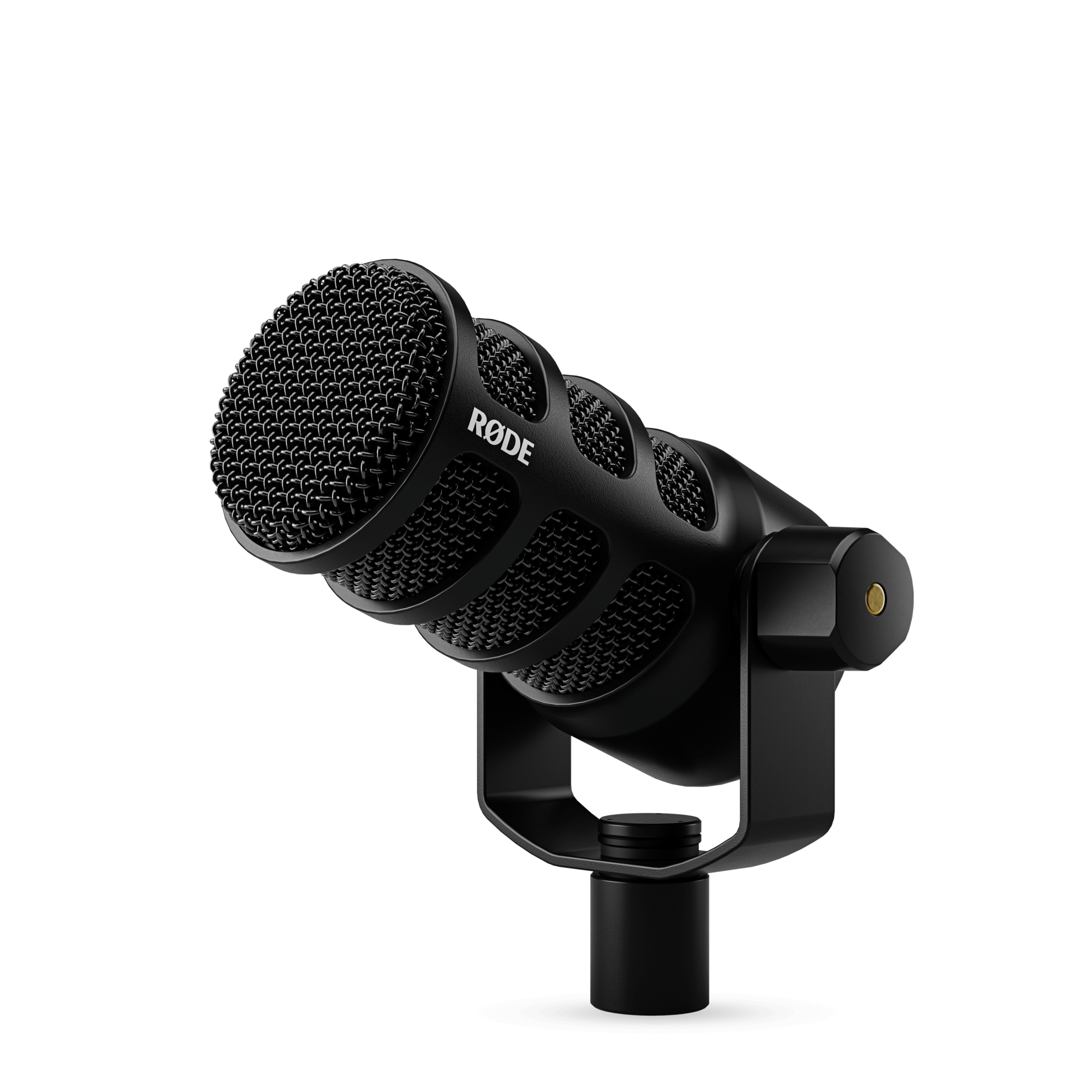
This is the strongest step-up choice if you want one microphone for a phone today and an XLR setup later. USB adds a headphone output and onboard processing, while the XLR connection keeps the mic useful when the rest of your system changes. At the checked $190 sale price, the feature set makes the jump from an entry-level hybrid easier to justify. RØDE · Sweetwater
Allow for a stand that can support it comfortably. In his original review, Bandrew Scott praised the supplied pop filter but found shock rejection less impressive; a solid mount and avoiding desk bumps remain worthwhile. He also reported that processing settings were retained on the microphone. These are attributed findings, not results from our own bench. Podcastage / Bandrew Scott
Phone / tablet: RØDE explicitly supports iOS and Android recording. For Lightning, follow its MFi cable guidance; the company distinguishes audio recording from phone-call support. RØDE
Buying verdict: Choose this over the original PodMic when starting without an interface. Choose the XLR-only model if you already have the rest of the recording chain.
Product image: Sennheiser electronic SE & Co. KG · Original source
04 / Best uncomplicated condenser
Sennheiser Profile USB
$123.08–$139 · Condenser · cardioid · USB-C
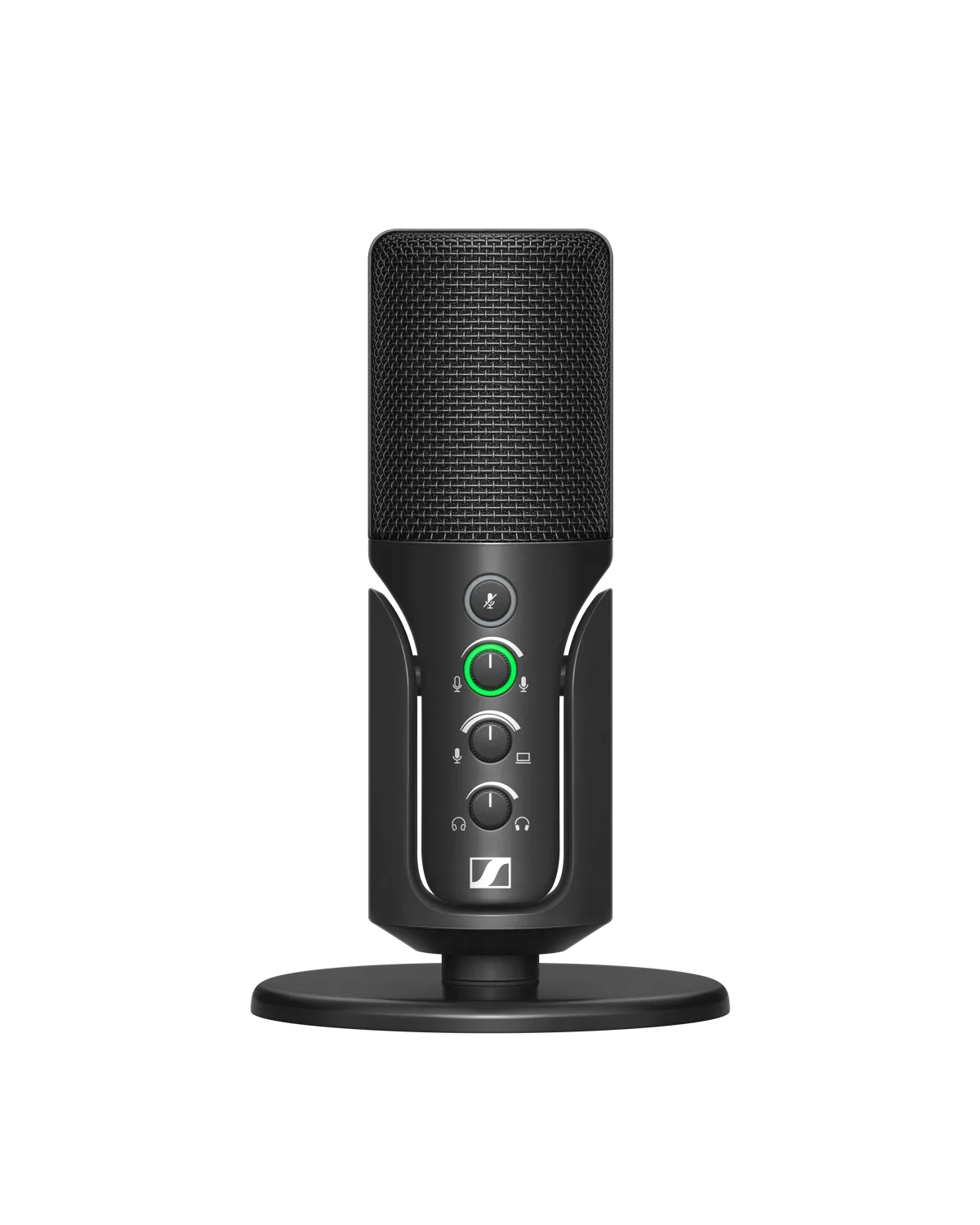
The Profile is for the person who wants useful controls on the microphone, not another configuration app. Gain, mute, headphone level and the balance between your own voice and computer playback are directly accessible. A table stand is included. At roughly $123–$139 in the checked listings, that is a compellingly complete package. Sennheiser · B&H · Sweetwater
Podcastage found its tone approachable rather than spectacular, with restrained bass and a less aggressive top end than some USB condensers, and liked the software-free controls. That is a better reason to consider it than a promise that a condenser will magically make every room sound like a studio. Position it close and listen for reflections before buying more processing. Podcastage / Bandrew Scott
Phone / tablet: The manufacturer documents USB-C Apple devices and iPadOS. Treat it as a USB-C option and confirm your exact iPhone configuration; do not buy it on an assumption of Lightning support. Sennheiser
Buying verdict: Especially appealing for a quiet home recording space. USB-only means no simple analog connection to a future XLR mixer.
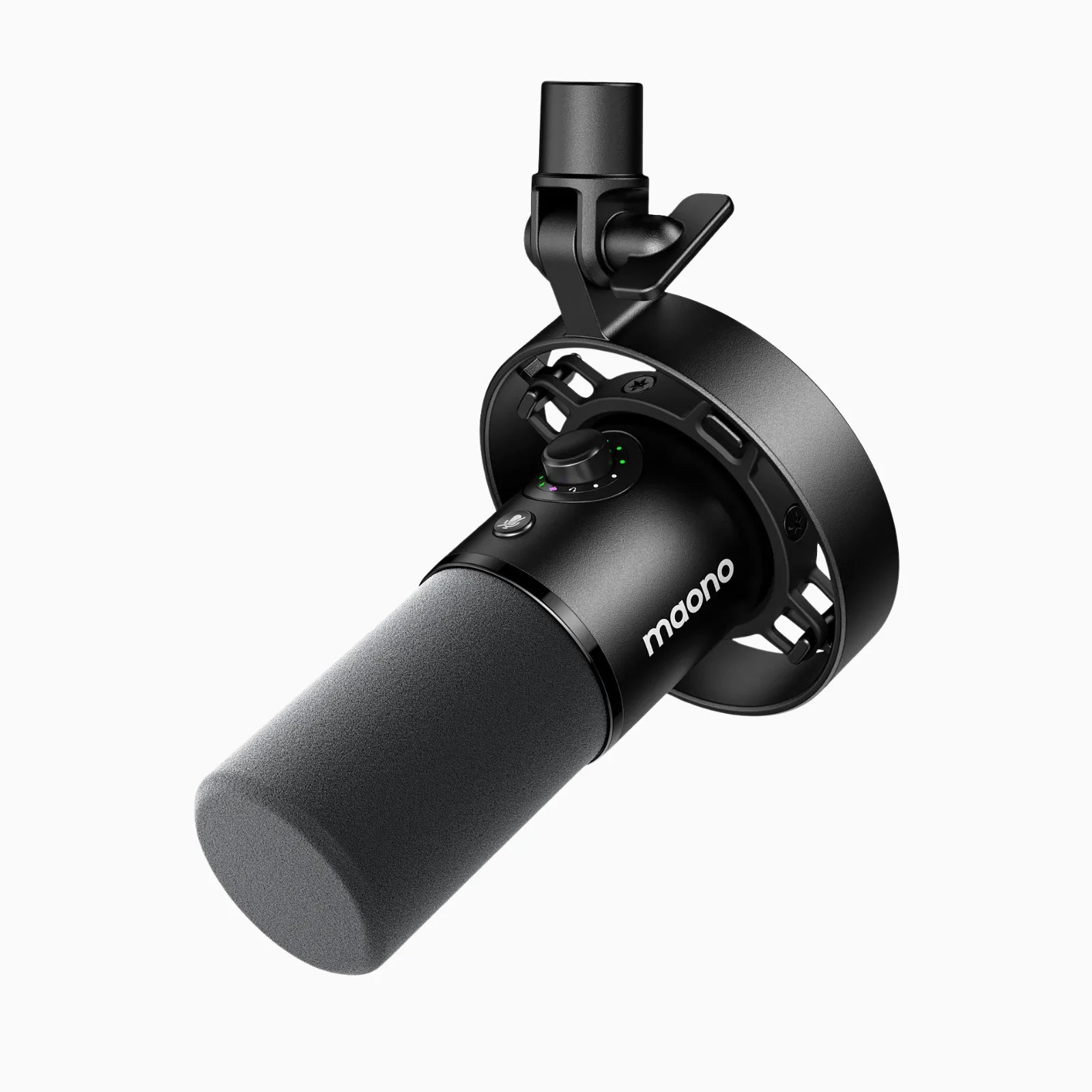
The PD300X makes the shortlist on features per dollar: USB and XLR, hardware controls, a shock mount, and USB-side processing through MAONO Link. The direct price is $119.99, reduced from $129.99. MAONO
We have not established an equally strong independent comparison base for this exact model. XLR does not carry the USB software functions, and mobile documentation is less precise than we would like. Favor a workable return policy and verify the bundle’s stand contents. This is a shortlist candidate to audition, not a laboratory winner. MAONO
Phone / tablet: MAONO lists smartphone use but explicitly discourages using a Lightning adapter. This is not our default recommendation for a Lightning iPhone. MAONO
Buying verdict: A feature-led shortlist pick, with lower evidence confidence than the leading choices—not a proven sonic equal to a more expensive microphone.
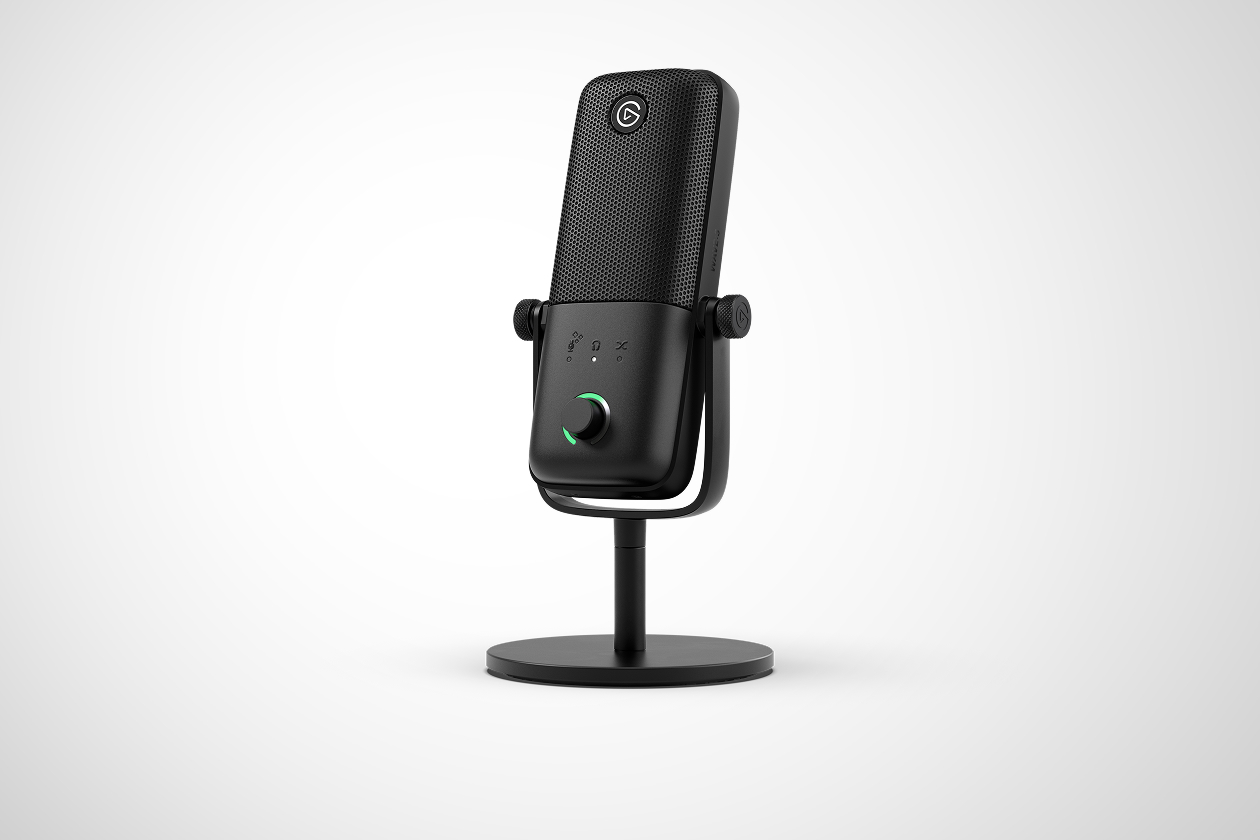
Specify MK.2, not the original Wave:3. At $169.99 with a stand, it combines onboard Wave FX processing, automatic gain setup and Clipguard 2.0. Headphone monitoring can include the onboard processing. Elgato
Consider it for desktop podcasts and streams. Distinguish onboard processing from effects and routing dependent on the computer’s Wave Link software. We have not independently tested this revision; customer ratings pooled across generations do not establish MK.2-specific performance. Elgato
Phone / tablet: The published requirements name Windows 11 or newer and macOS 14.2 or newer. Treat it as desktop-first; iPhone/Backpack compatibility has not been established here. Elgato
Buying verdict: Worth choosing for its production workflow. For a primarily iPhone-based show, the MV6 or PodMic USB has clearer manufacturer support.
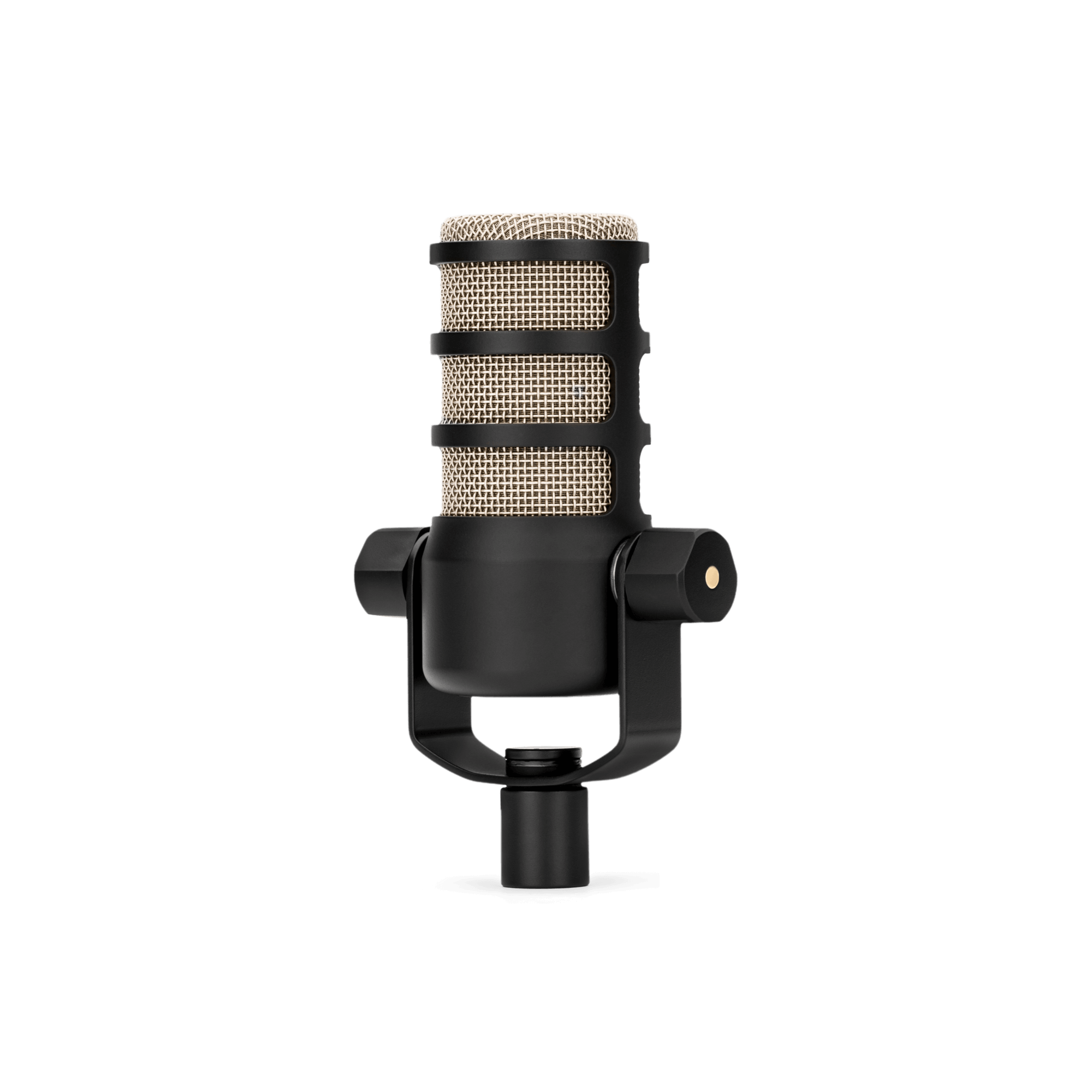
At the checked $86 sale price, the original PodMic makes much more sense for someone who already owns an interface than for a first-time buyer. It supplies the familiar broadcast-style form factor, integrated mounting yoke and internal pop filtering without charging for USB electronics you may not need. RØDE · Sweetwater
Its low sticker price is not the price of a recording system. Using the illustrative accessory budget below puts a from-scratch setup near $296, versus about $230 for the USB model and a stand. Those are budgeting examples, not packaged offers. For an existing XLR studio, however, another PodMic can be an economical way to add a speaking position.
Phone / tablet: Connect through a compatible audio interface with an appropriate phone connection and power arrangement. A passive XLR-to-USB cable is not a substitute for a mic preamp and converter. RØDE
Buying verdict: A particularly good conditional buy. It moves much higher in the ranking if your interface, stand and cable are already paid for.
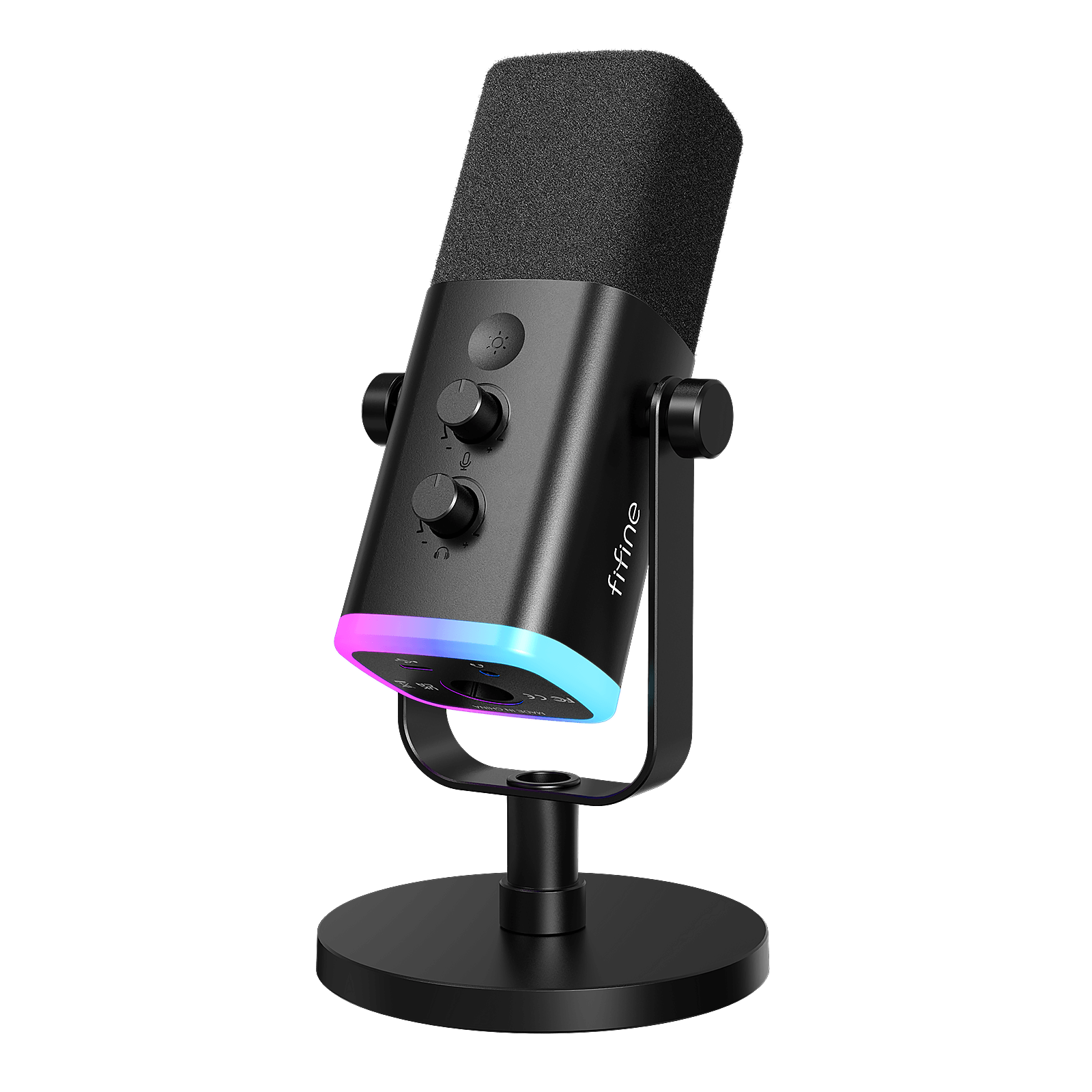
For a tight computer-recording budget, the black AM8 stand kit is hard to ignore at $57.99. It offers USB and XLR connections, a headphone output, controls and a desktop base at less than many microphones cost alone. Check the exact listing: AM8PROT and different cable or arm bundles are not the same purchase. FIFINE
Podcastage judged the AM8 good for its price but criticized its loose-feeling mount. That is a tangible compromise to consider if you adjust the angle often. In XLR mode, do not expect the USB-side buttons and lighting to behave as they do over USB. The low ranking here reflects a mobile-focused audience and practical compromises, not a claim that a $58 mic cannot make a good podcast. Podcastage / Bandrew Scott · FIFINE
Phone / tablet: FIFINE recommends PC/laptop use and cautions about phone adapters and battery demands. Buy this for a computer, not as an assured iPhone solution. FIFINE
Buying verdict: The budget winner for a desktop experiment. The Q2U is the more balanced starter-kit recommendation for this guide’s mixed audience.
Product image: sE Electronics International, Inc. · Original source
09 / Best interview-and-stage crossover
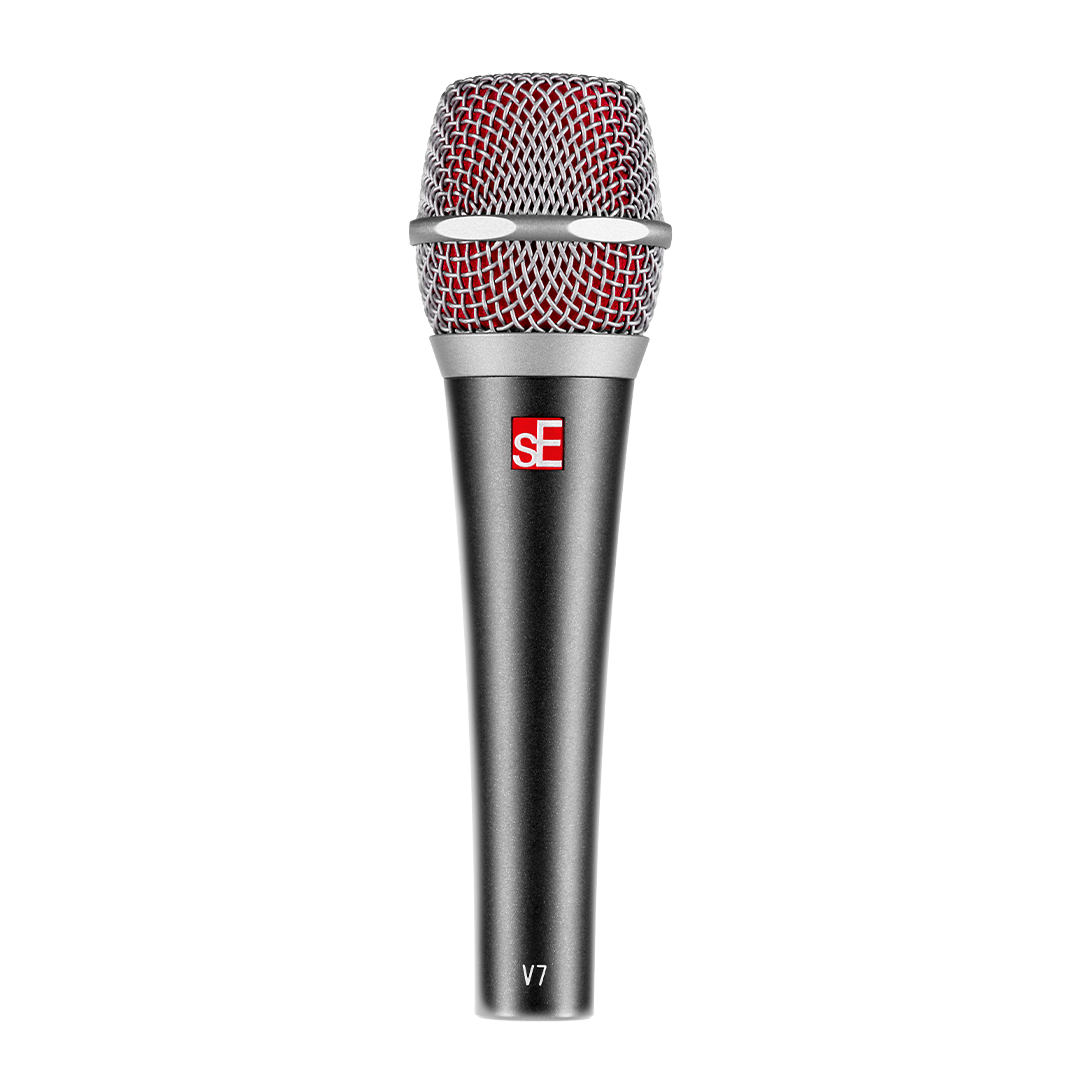
sE Electronics V7
$105 · Dynamic · supercardioid · XLR only
A podcast microphone does not have to look like a broadcast prop. The V7 is a handheld vocal microphone with a metal body and internal shock mounting. At $105, it is worth considering if the same mic needs to handle an interview, a presentation and a podcast recording through equipment you already own. sE Electronics · Sweetwater
Its supercardioid pattern is a different placement choice from the cardioids above. It narrows the forward pickup area but has a rear pickup lobe; “more directional” does not mean soundproof from every direction. Keep speaking position consistent and consider where competing sound is coming from. For a desk-only, phone-only beginner, a complete USB package is simpler. Shure
Phone / tablet: XLR only: phone use depends on the interface, not a direct connection to the mic. This is a flexibility recommendation for existing XLR users. RØDE
Buying verdict: Buy the standard V7, not the V7 X instrument variant or a wireless replacement capsule by mistake. Choose a USB mic if convenience is the priority.
The MV7+ is the premium choice to consider when automatic level handling, Shure’s voice-processing tools, headphone monitoring and an XLR upgrade path solve real workflow problems. The current black-microphone listing is $299; older $279 launch prices should not anchor a 2026 budget. Shure · Sweetwater
Its position at number ten is deliberate. A premium microphone can be useful without being the best marginal improvement for a new podcaster. Compare the complete price with an MV6 or PodMic USB plus a good mount. Buy the MV7+ for capabilities you will use, not an assumption that spending more makes speech proportionally better. The standard mic is not a complete stand-equipped setup.
Phone / tablet: Shure lists MOTIV mobile support as well as desktop software. Follow its specified cable requirements for Lightning, and distinguish USB processing from an analog XLR recording path. Shure
Buying verdict: A defensible premium purchase for a regular creator; unnecessary as a prerequisite for starting a professional-sounding show.
Recording with an iPhone or iPad.
A USB-C connector is not, on its own, a compatibility guarantee. The microphone’s supported devices, the cable’s ability to carry data, the available power and the recording app all matter. We have not physically tested these ten models with Backpack Studio; the mobile notes above describe the evidence available, not app certification.
USB-C devices: start with documented support.
For a Backpack-focused shortlist, the MV6, PodMic USB and MV7+ offer particularly clear manufacturer mobile guidance. The Profile is also worth investigating for a USB-C Apple setup. Elgato’s desktop software ecosystem and FIFINE’s computer-first advice are reasons not to buy those models solely because the socket looks right. Shure · RØDE · Shure · Sennheiser · Elgato · FIFINE
Lightning devices: use the mic maker’s exact connection recipe.
RØDE lists MFi cables for the PodMic USB; Shure specifies an additional Lightning cable for its supported models. Other USB audio devices may need Apple’s camera adapter and additional power. Apple specifically recommends a powered hub or the powered Lightning-to-USB 3 Camera Adapter arrangement when an accessory demands too much power. A generic charging adapter is not an interchangeable solution. RØDE · Shure · Apple
Two people in one room: plan the input system first.
For a multi-mic show, our practical recommendation is one compatible interface with enough microphone inputs, rather than assuming several separate USB microphones will combine automatically on a phone. XLR microphones feed the interface; the interface supplies the digital connection. Check input routing, power and monitoring with your exact app. RØDE
Before relying on a new setup: record a short test in Backpack Studio, confirm that the external mic is the input, listen on wired headphones, and check that your voice and soundpads are recorded at the intended levels. Test charging or hub arrangements too. Manufacturer compatibility is the starting point; a successful end-to-end test is the finish line.
The microphone is only part of the sound.
Get close; control the room.
Start with the mic near your mouth, keep your distance consistent, and turn down avoidable room noise. Close placement improves the relationship between direct voice and room reflections. Point the appropriate rejection area toward unwanted sound; a supercardioid is not identical to a cardioid. Shure
Do not buy on the myth that “dynamic” automatically removes background noise. Pattern, placement, room acoustics and how the result is level-matched all matter. A quieter room and a stable mount can be a better next purchase than a more expensive capsule.
Monitor, then process lightly.
Wear connected wired headphones or earbuds while recording. Use the mic or interface’s direct monitoring where appropriate, and avoid enabling a second delayed monitoring path. Listen for breath pops, table bumps, distorted peaks and words getting cut off before recording a full episode.
Try processing against an unprocessed reference at similar loudness. A noise gate can quiet pauses; it is not a cure for background sound underneath speech. Keep a test of your quietest words. The Backpack Studio noise-gate guide explains that workflow.
Good microphones that did not make this ten.
Audio-Technica ATR2100x-USB: a familiar budget recommendation, but its current manufacturer page marks it discontinued. A verified clearance unit can still be useful; an evergreen buying guide should not treat it as an uncomplicated current-production purchase. Audio-Technica
Audio-Technica AT2040USB: still worth comparing if the local price and its USB controls suit you. We selected the current Wave:3 MK.2 for the desktop-workflow slot. Podcastage’s original AT2040USB review found a pronounced upper-mid character that was not his favorite on voice—an example of why specification sheets alone cannot choose your preferred sound. Audio-Technica · Podcastage / Bandrew Scott
Premium broadcast favorites: leaving an expensive studio microphone out does not imply that it is bad. This list rewards a complete, useful purchase, not the most recognizable silhouette. Start with what your workflow lacks: better placement, another input, simpler operation, or a connection your phone actually supports.
How this guide was researched.
We checked current manufacturer product pages and manuals for the exact model, connections, accessories and platform support, then compared live US manufacturer or retailer listings rather than recycling launch prices. Original Podcastage reviews were used where available for attributed observations and comparison material. The resulting order is our editorial inference from that evidence—not a scientific scoring exercise, a sales chart or a hands-on ten-microphone shootout.
The selection spans inexpensive USB starters, USB/XLR hybrids, software-oriented desktop microphones and XLR-only options. Availability, complete setup cost, direct monitoring, mobile documentation and future usefulness mattered more than high sample-rate marketing. Older products can remain good buys in 2026; not every mic here was released this year.
Evidence limits: we did not perform our own audio measurements, listening shootout, long-term reliability study, firmware audit or Backpack compatibility test. The MAONO and current Elgato revision rely more heavily on maker documentation. The Q2U hardware revision and USB connector must be checked with the seller. Sale prices, stock and firmware can change. Independent reviewers may use affiliate links; this guide adds no affiliate tracking.
What would change the order? A desktop-only budget puts the AM8 closer to the top. Owning an interface raises the PodMic XLR and V7. Prioritizing documented mobile support favors the Shure and RØDE USB options. A microphone that sounds best on your voice in a level-matched test can reasonably beat our general-purpose ranking.
Sources and photo credits.
All links accessed September 10, 2026. Retail pages support the price snapshot; manufacturer pages support specifications, not independent performance rankings. Reviews are original published assessments, not tests performed for this guide.